The Methodology v2 score
The overall score is built from evidence-backed page checks. The weights show which parts have the most effect:
- Content depth, 30%: the page gives enough specific information to answer its topic.
- Entity clarity, 15%: the page makes clear who or what it describes.
- Answer-first structure, 15%: the useful answer appears early. This is also called BLUF, or bottom line up front.
- Page structure, 12%: headings and sections make the content easy to parse.
- Schema markup, 10%: structured data identifies the page and its main entities.
- Image captions, 8% when applicable: meaningful images have useful surrounding explanation.
- Meta information, 4%: the page has clear title and description signals.
- Sitemap, 3%: the site provides a usable page-discovery path.
- Hreflang, 3% when applicable: international versions declare their language and market relationships.
Image captions apply only to pages where meaningful images need explanation. Hreflang applies only to an international language or market setup.
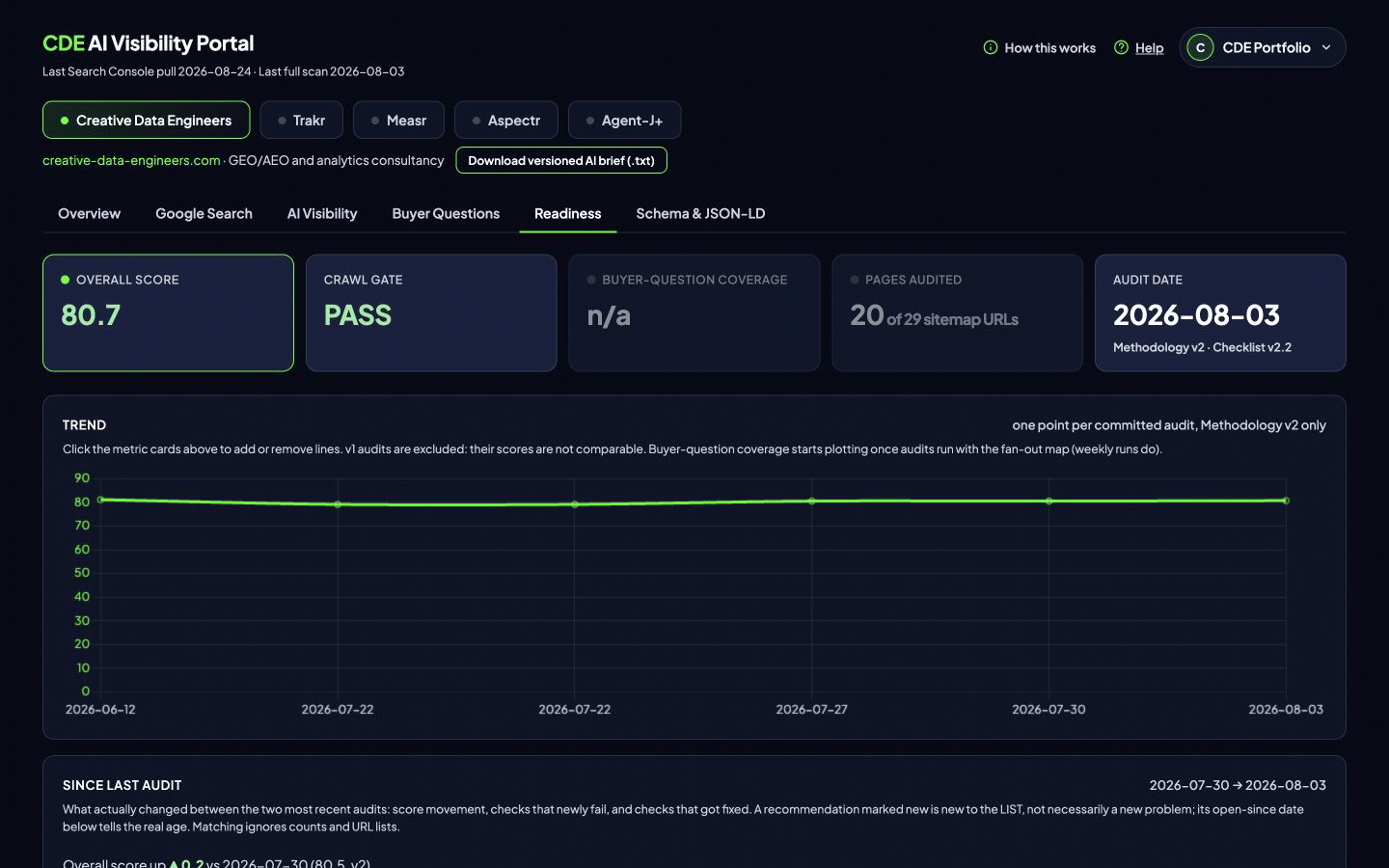
The crawlability gate sits above the score
A strong page cannot help an engine that cannot retrieve it. The portal therefore reports a separate access state for each monitored engine above the weighted readiness score.
Pages are audited after rendering
The audit loads the rendered page, including content produced by JavaScript, before it scores content depth, structure, and schema. A JavaScript site therefore receives credit for content that appears in the completed page.
Direct AI fetchers may still receive less than the rendered audit sees. Some fetchers do not run the same browser process, so a site can have a good rendered score while its raw delivery remains thin. The readiness findings call out that difference when it matters.
Use category findings to plan work
The total is a summary. Open the category and page findings to see the specific evidence behind it. Start with closed crawl gates and high-weight gaps, then use later releases to confirm whether the result changed.
Frequently asked questions
Is crawlability part of the readiness score?
Crawlability is a separate per-engine gate above the weighted score.
Are JavaScript pages audited after rendering?
Yes. The audit renders pages before scoring their content and structure.
Why are captions and hreflang conditional?
Their weights apply only when the page uses meaningful images or has an international language setup.
What does BLUF mean?
BLUF means bottom line up front. The page states the useful answer before supporting detail.